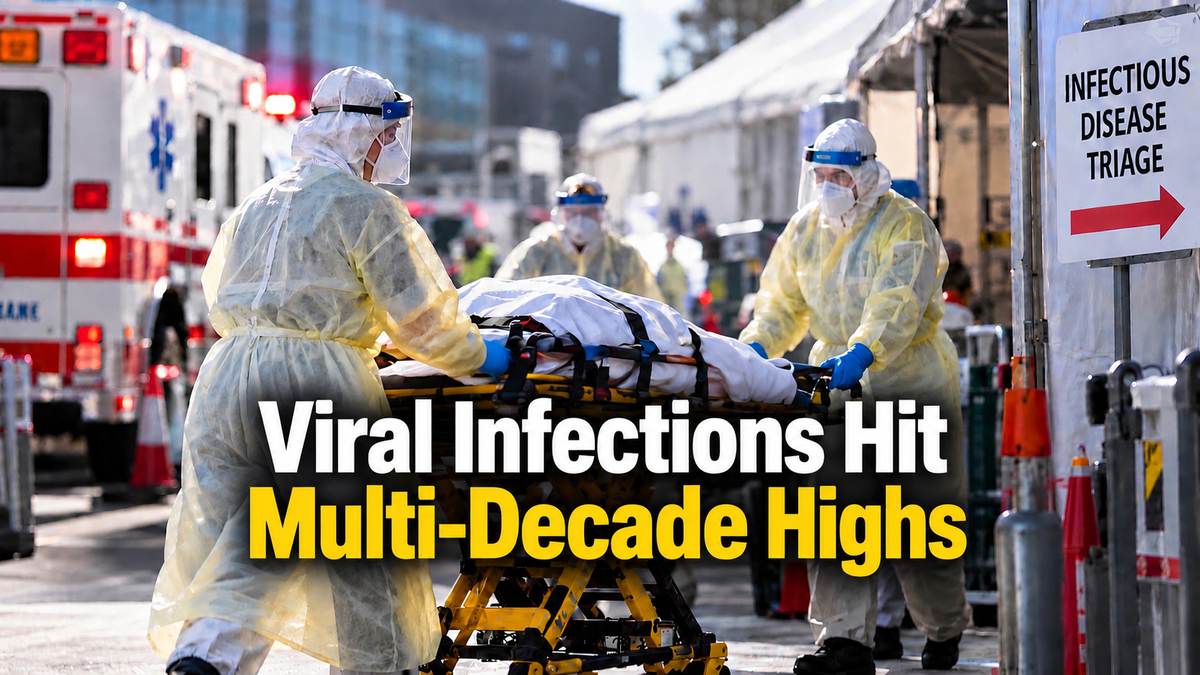
The United States is confronting its most serious measles resurgence in more than three decades, forcing public health authorities to intensify vaccination, testing and containment efforts as outbreaks continue spreading across multiple states.
As of October 1, 2026, 3,887 confirmed measles cases had been reported nationwide, according to federal surveillance data. That represents the highest annual U.S. total since 1991 and a dramatic reversal for a disease that was declared eliminated from the country in 2000.
Pennsylvania has emerged as a major center of the current crisis. State officials reported 1,004 cases by October 5, including 198 hospitalizations. Five Pennsylvania residents who contracted measles have died, while Lancaster County has recorded hundreds of infections.
The scale of the Pennsylvania outbreak places it among the largest measles outbreaks recorded in the United States in more than 30 years.
New York has also escalated its response. Governor Kathy Hochul declared a statewide disaster emergency on October 5 as the state recorded 108 cases during 2026, including 92 since mid-July. The emergency temporarily expands the ability of healthcare professionals to provide vaccinations and testing.
Pharmacists can vaccinate children as young as two under the order, while registered nurses have broader authority related to measles testing. State and local health departments have already administered more than 1,000 MMR vaccine doses in affected rural communities.
The growing outbreaks are particularly concerning because measles is among the world’s most contagious infectious diseases. The virus can remain infectious in the air after an infected person leaves an enclosed space, allowing transmission to occur rapidly among people without immunity.
Vaccination remains the primary defense. Two doses of the measles, mumps and rubella vaccine are about 97% effective at preventing measles. Public health specialists generally emphasize maintaining approximately 95% two-dose vaccination coverage to prevent sustained community transmission.
Declining vaccination coverage has created pockets of susceptibility where a single imported infection can develop into a much larger outbreak.
The consequences extend beyond case totals. Hospitals must rapidly identify suspected infections, isolate patients and protect infants, immunocompromised people and others at greater risk of complications. Nearly 200 people have already been hospitalized in Pennsylvania alone.
The resurgence is also part of a wider regional pattern. Health authorities across the Americas have reported their highest measles burden in more than two decades during 2026, reflecting immunity gaps and continuing transmission across national borders.
For U.S. health departments, the immediate strategy centers on vaccination campaigns, rapid laboratory testing, contact tracing and isolation of infectious patients. Communities experiencing outbreaks are also being urged to verify vaccination records rather than assume they remain adequately protected.
The 2026 measles surge demonstrates how quickly a vaccine-preventable disease can return when community immunity falls below the level needed to interrupt transmission.
With thousands of infections already documented and outbreaks continuing into the fall, the public health challenge is no longer simply preventing isolated imported cases. Authorities are now attempting to stop sustained transmission while rebuilding vaccination coverage in communities where immunity has weakened.
The coming months will be critical. Measles transmission can accelerate wherever large numbers of susceptible people gather, making rapid identification of cases and stronger vaccination coverage essential to bringing the outbreaks under control.
Leave a Reply