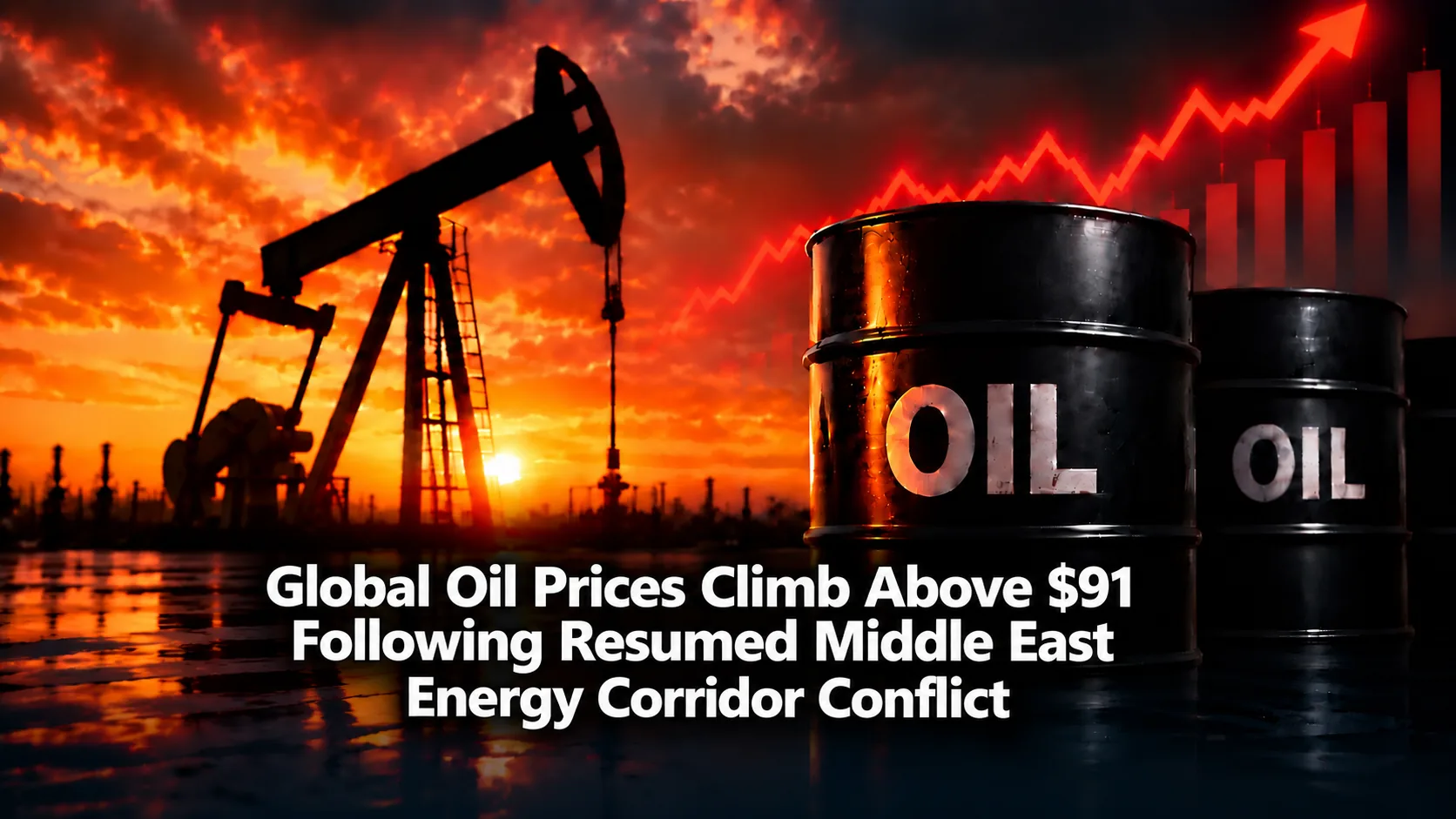
Global oil markets are facing renewed pressure as crude prices remain elevated following another escalation in tensions between the United States and Iran. On September 4, 2026, oil benchmarks were headed for strong weekly gains as investors assessed the risk of further disruptions to energy shipments through the Middle East.
Brent crude traded around $95 a barrel, while U.S. West Texas Intermediate crude remained near $91 a barrel after moving above that level earlier in the session. The sharp weekly advance reflects growing concern that renewed military exchanges could threaten supplies moving through one of the world’s most important energy corridors.
The Strait of Hormuz remains at the center of global oil market concerns.
The narrow waterway connects major Persian Gulf energy producers with international markets and historically handled roughly one-fifth of global oil and liquefied natural gas supplies before the current conflict began. Any prolonged restriction on shipping through the strait could reduce available supplies and increase transportation and insurance costs.
Shipping activity through the Strait of Hormuz has already fallen significantly. Preliminary data showed only four commodity vessels crossing the waterway on Thursday, compared with a recent 10-day average of about 15. The reduced traffic has reinforced concerns that energy flows could remain constrained if military tensions continue.
Renewed U.S.-Iran hostilities are adding a geopolitical risk premium to crude oil prices.
The latest escalation follows renewed American strikes against Iranian targets and Iranian military responses. The fighting has intensified concerns about the security of commercial shipping and regional energy infrastructure. Israel has also renewed warnings against Iran, further increasing uncertainty across global energy markets.
Despite some day-to-day declines in crude prices, the broader weekly trend remains sharply higher. Brent was on course for a gain of more than 6% for the week, while WTI had risen close to 9%, making this one of the strongest weekly performances for oil in recent months.
The consequences could extend far beyond energy markets.
Higher crude oil prices can eventually increase gasoline, diesel, transportation and manufacturing costs. Businesses that depend heavily on fuel may face higher operating expenses, while consumers could see additional pressure on household budgets. Persistent energy inflation can also complicate the outlook for central banks attempting to keep broader inflation under control.
U.S. diesel prices have already come under significant pressure as supply concerns intensify, highlighting how geopolitical disruptions can quickly move from global commodity markets into transportation and consumer costs.
Oil traders are now closely watching several factors: military developments between the United States and Iran, commercial vessel traffic through the Strait of Hormuz, Iranian oil exports, Iraqi production and exports, and any diplomatic efforts capable of reducing tensions.
Iraq has increased oil exports compared with July, providing some additional supply to the market. However, traders remain cautious because additional barrels from other producers may not fully eliminate the risks created by prolonged restrictions at a critical shipping chokepoint.
The direction of oil prices will largely depend on whether the conflict escalates further or moves toward de-escalation.
If shipping conditions improve and tensions ease, some of the geopolitical premium currently built into crude prices could decline. But additional attacks on vessels, energy facilities or regional infrastructure could quickly push prices higher again.
For consumers, businesses and investors, the Strait of Hormuz has therefore become one of the most important indicators to watch in the global economy.
As of September 4, the oil market is sending a clear signal: Middle East supply security remains a major global economic risk, with Brent near $95 and WTI around $91 a barrel as markets prepare for continued volatility.
Leave a Reply