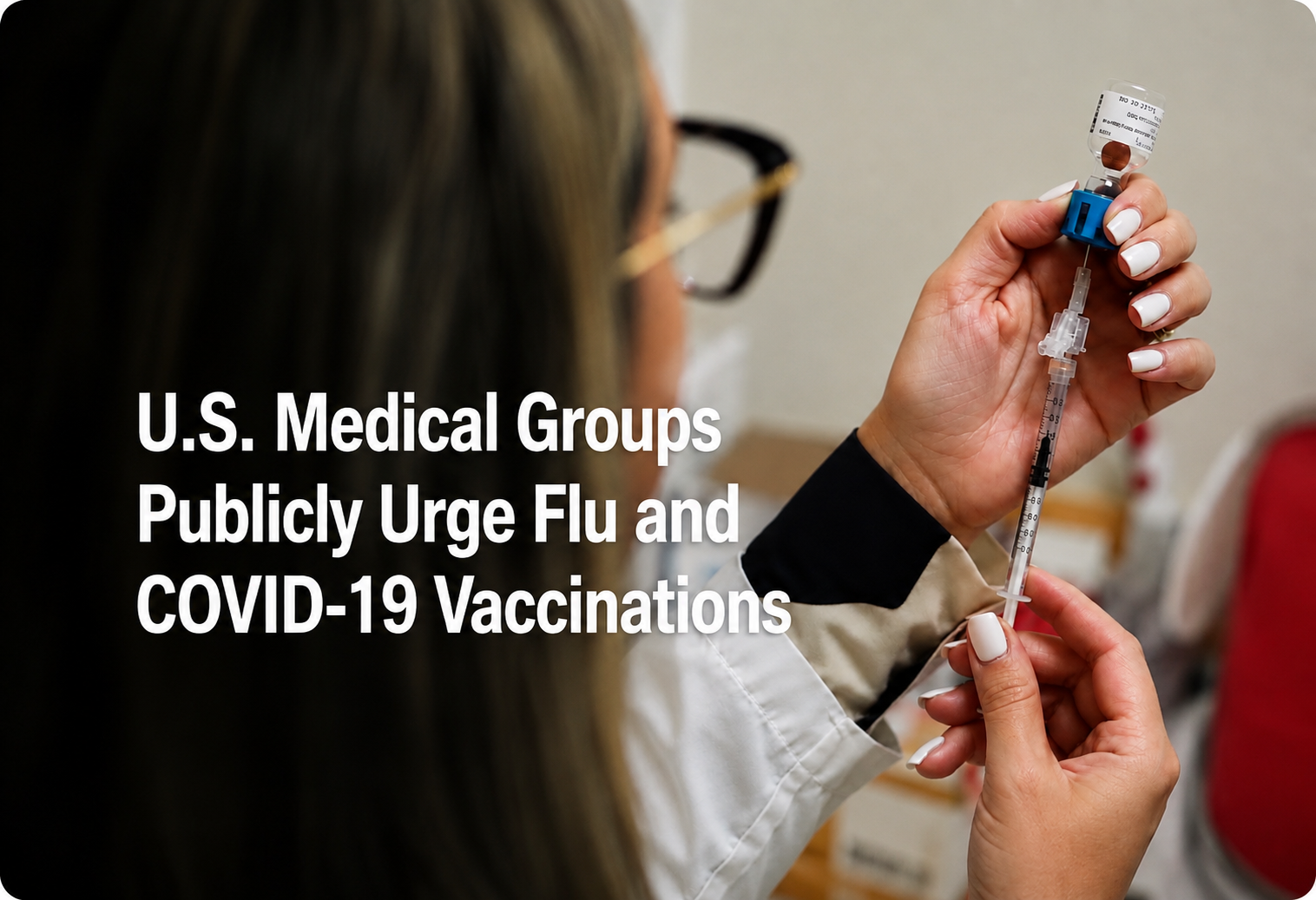
As the United States prepares for the 2026–2027 respiratory virus season, leading medical organizations are taking an unusually prominent role in shaping vaccine guidance. On Wednesday, September 2, major physician groups released updated recommendations supporting vaccination against influenza, COVID-19 and respiratory syncytial virus, or RSV, as federal health guidance continues to evolve.
The coordinated recommendations come from the American Academy of Family Physicians, American Academy of Pediatrics, American College of Obstetricians and Gynecologists and Infectious Diseases Society of America. Their guidance was informed by an independent review of recent scientific evidence conducted with support from the American Medical Association and the Vaccine Integrity Project.
The central message from physicians is that vaccination remains an important tool for reducing severe illness, hospitalization and death from respiratory viruses.
For influenza, the medical groups broadly agree that nearly everyone age 6 months and older should receive an annual flu vaccination, unless there is a medical reason not to do so. Protection is considered especially important for adults 65 and older, pregnant women, young children and people with chronic medical conditions or weakened immune systems.
The recommendations arrive as updated vaccines begin reaching clinics and pharmacies ahead of the fall and winter respiratory season. They also follow two particularly severe flu seasons in which pediatric deaths drew renewed attention to the risks influenza can pose to children.
COVID-19 recommendations show a more significant difference between some physician organizations and current federal policy.
The American Academy of Family Physicians recommends an updated COVID-19 vaccination for adults, with particular emphasis on people 65 and older and those at greater risk of severe disease. For adults 65 and older, the organization recommends another dose six months after the first updated dose to help maintain protection.
For children, the American Academy of Pediatrics recommends COVID-19 vaccination for all children between 6 and 23 months. It also recommends vaccination for older children and teenagers who face an increased risk of severe COVID-19. Families of children ages 2 through 18 who are not considered high-risk may still choose vaccination after considering their individual circumstances.
Pregnancy is another area where medical organizations are maintaining broader recommendations.
The American College of Obstetricians and Gynecologists continues to recommend COVID-19 vaccination for people who are pregnant, postpartum, breastfeeding or planning pregnancy. The organization also supports appropriate influenza and RSV immunization during pregnancy as part of preventive care.
RSV guidance varies according to age and medical risk. Recommendations include protection for certain infants and young children, older adults and people whose health conditions increase their likelihood of developing serious complications.
The unusual development this year is not simply the vaccines themselves, but the growing separation between recommendations issued by major medical organizations and the federal vaccination framework.
Traditionally, Americans have looked primarily to federal health agencies and their advisory process for unified seasonal vaccine recommendations. This year, physician organizations are emphasizing their own evidence-based guidance as changes in federal vaccine policy and ongoing legal disputes surrounding the federal advisory process have created uncertainty.
Independent scientific reviews released alongside the recommendations concluded that current influenza, COVID-19 and RSV immunizations continue to provide meaningful protection against serious outcomes. The reviews also reported no new safety concerns based on the recent comparative evidence examined.
For patients, the practical result is a vaccination landscape that may appear more complicated than in previous years. Age, pregnancy, underlying medical conditions and individual risk can affect which vaccines are recommended and when they should be administered.
The 2026 fall vaccine season therefore represents more than a routine annual update. It reflects a significant shift in how Americans may receive public-health guidance.
With respiratory infections expected to increase as schools reopen and colder months approach, physicians are encouraging patients to discuss their individual circumstances with their healthcare providers rather than assume that one recommendation applies equally to everyone.
The debate over federal vaccine policy is likely to continue. But for the nation’s major medical organizations, the message released Wednesday is clear: their 2026–2027 recommendations will continue to be based on their assessment of the latest available scientific evidence, with preventing severe disease and protecting vulnerable patients remaining the primary goals.
Leave a Reply