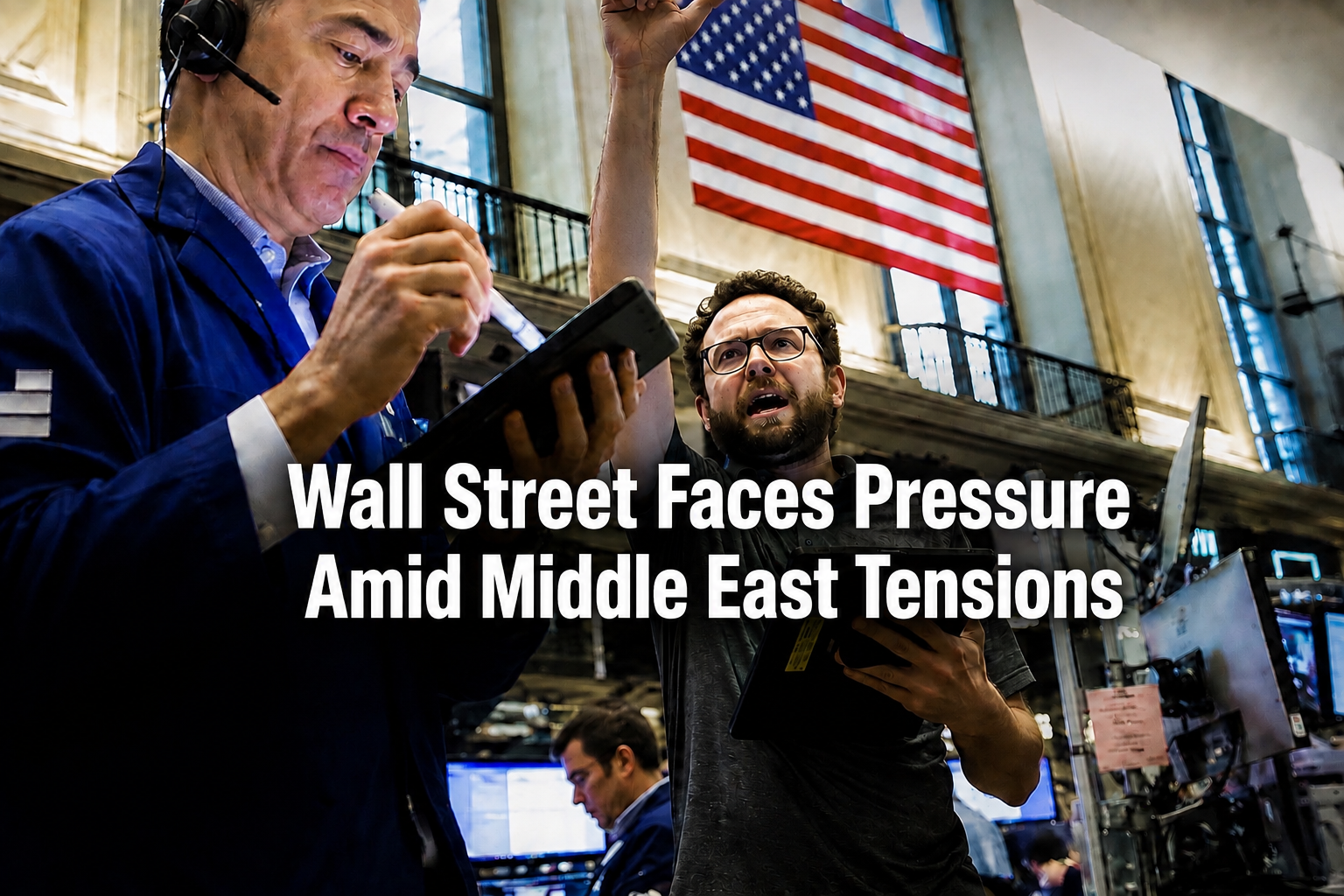
Wall Street Slides and Oil Spikes Following Middle East Escalation
Wall Street opened September under renewed pressure on Tuesday as escalating tensions in the Middle East pushed oil prices higher, lifted U.S. Treasury yields and revived concerns that inflation could remain stubbornly elevated.
As of the morning of September 1, 2026, major U.S. stock indexes were trading lower. The S&P 500 fell roughly 0.5%, while the Dow Jones Industrial Average declined about 0.4%. The technology-heavy Nasdaq Composite suffered the largest drop, falling close to 1% as investors reduced exposure to higher-growth stocks.
The market decline comes after U.S. stocks finished August with monthly gains but entered September facing a significantly more complicated combination of geopolitical risk, rising energy prices and higher borrowing costs.
Oil prices have quickly become one of the biggest risks facing global financial markets.
Brent crude, the international oil benchmark, climbed about 2% Tuesday and traded above $92 per barrel. U.S. West Texas Intermediate crude also advanced more than 2%, trading near $88 per barrel.
The renewed surge followed fresh military exchanges involving the United States and Iran, raising concerns that the conflict could further disrupt energy shipments through the Persian Gulf.
Particular attention remains focused on the Strait of Hormuz, one of the world’s most strategically important energy corridors. In normal conditions, roughly one-fifth of global oil supplies pass through the waterway. Any prolonged disruption to tanker traffic could tighten global supply and keep oil prices elevated.
Reports of additional attacks involving commercial tankers near the Strait added another layer of uncertainty Tuesday.
Higher Oil Prices Revive Inflation Concerns
For investors, the consequences extend far beyond energy markets.
Higher crude prices eventually affect gasoline, transportation, manufacturing and shipping costs. Businesses facing higher operating expenses may pass some of those costs to consumers, making inflation more difficult to control.
That possibility is particularly important for the Federal Reserve.
Persistent energy inflation could force the Federal Reserve to maintain tighter monetary policy—or potentially raise interest rates again—to bring inflation under control.
Expectations for higher interest rates have already placed substantial pressure on the bond market.
The benchmark 10-year U.S. Treasury yield climbed toward 4.8% Tuesday, reaching its highest levels since early 2025. Rising Treasury yields can make stocks less attractive because investors can earn higher returns from government bonds while taking considerably less risk.
Technology and other growth-oriented companies are often particularly sensitive to higher interest rates because their valuations depend heavily on expectations for future earnings.
That dynamic helped explain Tuesday’s weakness in technology shares, with major semiconductor and artificial-intelligence-related companies among the stocks facing selling pressure.
Investors Face a New September Test
September has historically been a challenging month for U.S. equities, and investors are entering this one with several major uncertainties occurring simultaneously.
Geopolitical developments remain at the center of attention, but Wall Street is also watching inflation, employment conditions, economic growth and the Federal Reserve’s next policy decision.
The central question is whether higher energy prices represent a temporary geopolitical shock or the beginning of a longer inflationary problem.
If tensions ease and oil shipments normalize, crude prices could retreat and remove some pressure from stocks and bonds.
However, continued military escalation or additional disruptions around the Strait of Hormuz could produce the opposite result.
A prolonged oil shock could increase inflation, weaken consumer spending and raise operating costs for American businesses at the same time.
That combination would create a particularly difficult environment for financial markets because investors would have to balance slower economic growth against the possibility of higher interest rates.
Energy companies could benefit from elevated crude prices, while airlines, transportation companies and other fuel-intensive industries could face greater cost pressures.
Consumers could also feel the impact directly through higher gasoline and transportation prices.
What Wall Street Is Watching Next
Investors will closely monitor developments in the Middle East, particularly any signs that the conflict is expanding or moving toward renewed negotiations.
Oil prices and Treasury yields are likely to remain two of the most important market indicators.
Wall Street will also scrutinize upcoming U.S. employment and inflation data for evidence about whether the economy can withstand higher borrowing and energy costs.
For now, markets are entering September with noticeably greater caution.
The combination of Middle East escalation, rising oil prices, higher Treasury yields and renewed inflation fears has changed the short-term investment landscape.
The next major move on Wall Street may depend less on corporate earnings alone and more on whether geopolitical tensions—and the global energy shock accompanying them—continue to intensify or finally begin to ease.
Leave a Reply