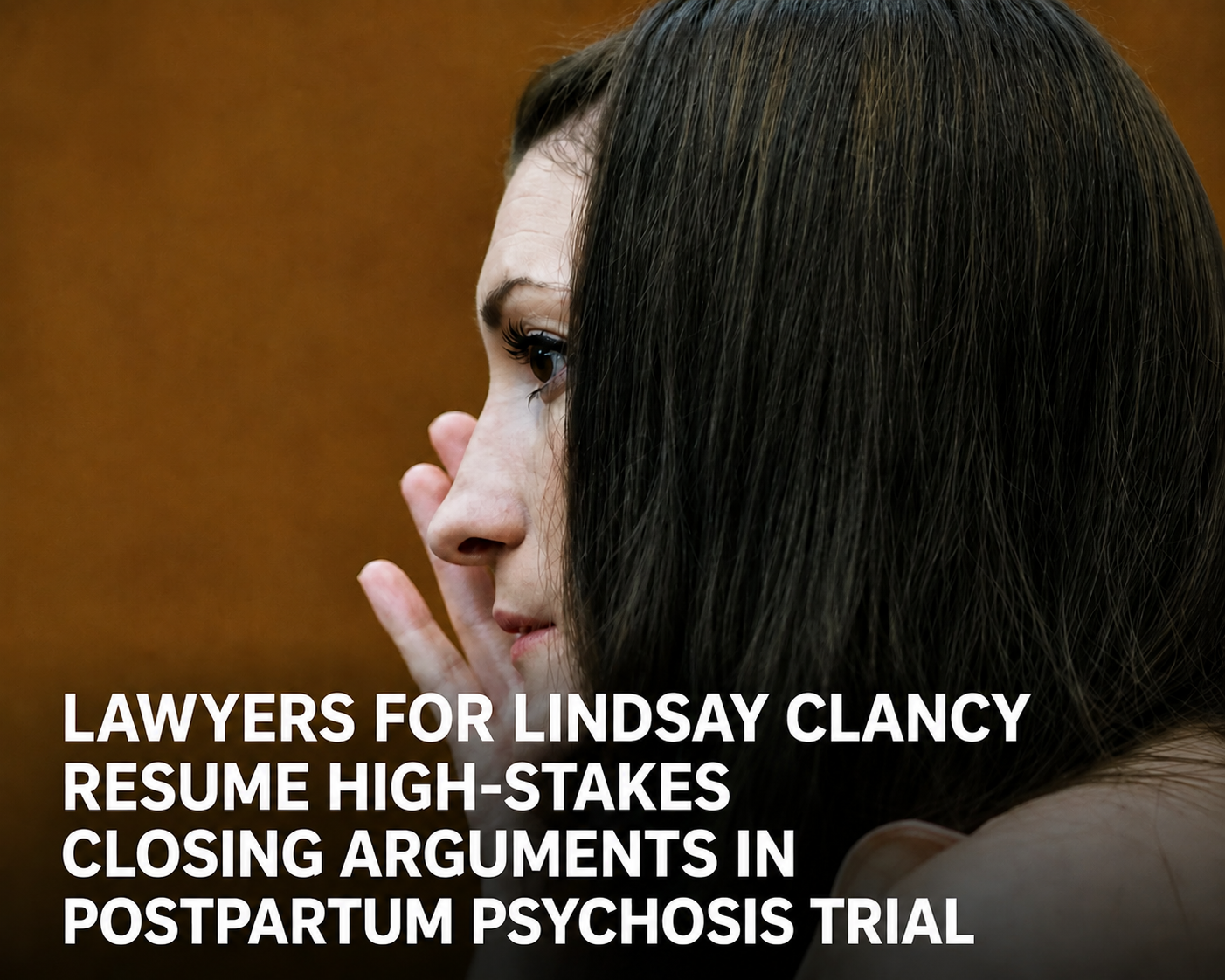
Lindsay Clancy Trial Reaches Critical Stage as Deadlocked Jury Weighs Postpartum Psychosis Defense
The closely watched murder trial of Lindsay Clancy, the Massachusetts mother accused of killing her three young children, has entered an increasingly tense stage as jurors struggle to reach a unanimous verdict.
As of September 1, 2026, the jury has informed Plymouth Superior Court Judge William Sullivan that it has been unable to agree on whether Clancy should be held criminally responsible for the deaths of her children. The judge instructed the jurors to continue deliberating after more than 17 hours of discussions spanning several days.
The development comes after weeks of testimony and powerful closing arguments centered on one extraordinarily difficult question: Was Lindsay Clancy legally responsible for her actions, or was she experiencing postpartum psychosis so severe that she could not understand the wrongfulness of what she was doing?
Clancy, 36, a former labor and delivery nurse, has acknowledged killing her three children — Cora, 5, Dawson, 3, and Callan, 8 months — inside the family’s Duxbury, Massachusetts, home on January 24, 2023.
She has pleaded not guilty by reason of lack of criminal responsibility.
Defense Centers Case on Postpartum Psychosis
Defense attorney Kevin Reddington argued that Clancy was a loving mother whose mental condition deteriorated dramatically following the birth of her youngest child.
During closing arguments, Reddington emphasized her history of seeking psychiatric treatment and challenged the medical care and medications she received before the deaths.
The defense maintains that Clancy experienced postpartum psychosis, a rare but severe psychiatric condition that can involve delusions, hallucinations, paranoia and a profound loss of contact with reality.
A central part of the defense case involved Clancy’s account that she heard a male voice directing her to kill her children and herself.
Defense experts testified that her mental illness prevented her from appreciating the wrongfulness of her actions. Reddington urged jurors to view the tragedy through the lens of severe psychiatric illness rather than intentional murder.
The defense is not disputing what happened. It is disputing whether Clancy possessed the mental capacity required for criminal responsibility.
That distinction has become the defining issue of the trial.
Prosecutors Argue the Killings Were Deliberate
Prosecutors presented a sharply different interpretation.
Assistant District Attorney Jennifer Sprague argued that Clancy suffered from mental health problems but remained capable of understanding her actions and knowing they were wrong.
The prosecution focused heavily on the sequence of events surrounding the killings.
Clancy’s husband, Patrick Clancy, had left the home to pick up medication and food. Prosecutors argued that Lindsay Clancy used the period when he was away to kill the children with exercise bands before attempting to take her own life.
The prosecution described her actions as organized and purposeful, arguing that decisions about timing, location and method demonstrated deliberate thinking.
Sprague also challenged the defense’s assertion that a commanding voice caused the killings, questioning why Clancy had not reported such voices to medical providers before the tragedy.
For prosecutors, mental illness alone does not eliminate criminal responsibility. The crucial question is whether Clancy still understood that killing her children was wrong.
More Than 80 Witnesses and 300 Exhibits
The scale of the trial illustrates the complexity facing jurors.
Judge Sullivan noted that the jury heard testimony from more than 80 witnesses and reviewed more than 300 exhibits during a trial lasting several weeks.
Medical specialists, mental health professionals, first responders and members of Clancy’s family testified.
Jurors also heard emotional testimony from Patrick Clancy, who returned home on the night of the killings and discovered his severely injured wife before finding the children.
The prosecution and defense presented competing expert interpretations of Lindsay Clancy’s psychiatric condition, leaving jurors to evaluate complicated medical evidence alongside Massachusetts criminal law.
Jury Reports It Cannot Reach Unanimous Verdict
The trial took another dramatic turn Tuesday when jurors notified the court that they had been unable to reach a unanimous decision.
Rather than immediately declaring a mistrial, Judge Sullivan directed them to continue their deliberations.
The jury consists of nine women and three men and has now spent multiple days examining the evidence.
A prolonged disagreement does not automatically mean the case will end without a verdict. Jurors may continue discussing the evidence and ultimately reach consensus.
However, if the jury remains genuinely unable to agree, the possibility of a hung jury and mistrial becomes increasingly significant.
A Trial With Consequences Beyond the Courtroom
The Lindsay Clancy case has attracted national attention because it reaches far beyond the question of one defendant’s guilt.
It has placed postpartum psychosis, maternal mental health treatment and criminal responsibility at the center of a major American courtroom debate.
Postpartum psychosis is considerably rarer and more severe than postpartum depression. It can involve hallucinations, delusions and severely impaired judgment, although the overwhelming majority of women experiencing postpartum mental illness do not harm their children.
The Clancy trial therefore presents jurors with an unusually difficult intersection of psychiatry and criminal law.
If prosecutors prove beyond a reasonable doubt that Clancy was criminally responsible and the jury convicts her of first-degree murder, she could face life imprisonment without parole.
If jurors conclude that severe mental disease prevented her from appreciating the wrongfulness of her conduct or meeting the legal standard for criminal responsibility, the outcome could be fundamentally different.
For now, there is no verdict.
The jury has reported a deadlock, but deliberations continue under the judge’s instruction.
After years of legal proceedings and weeks of intensely emotional testimony, the Lindsay Clancy trial has reached its most consequential moment — one in which twelve jurors must determine where severe mental illness ends and criminal responsibility begins.
Leave a Reply