FDA Issues High-Risk Alert for Medtronic Reflux-Monitoring Devices After 184 Serious Injuries
The U.S. Food and Drug Administration has issued a new high-risk safety alert involving certain Medtronic devices used to diagnose gastroesophageal reflux, following reports of 184 serious injuries associated with the device issue.
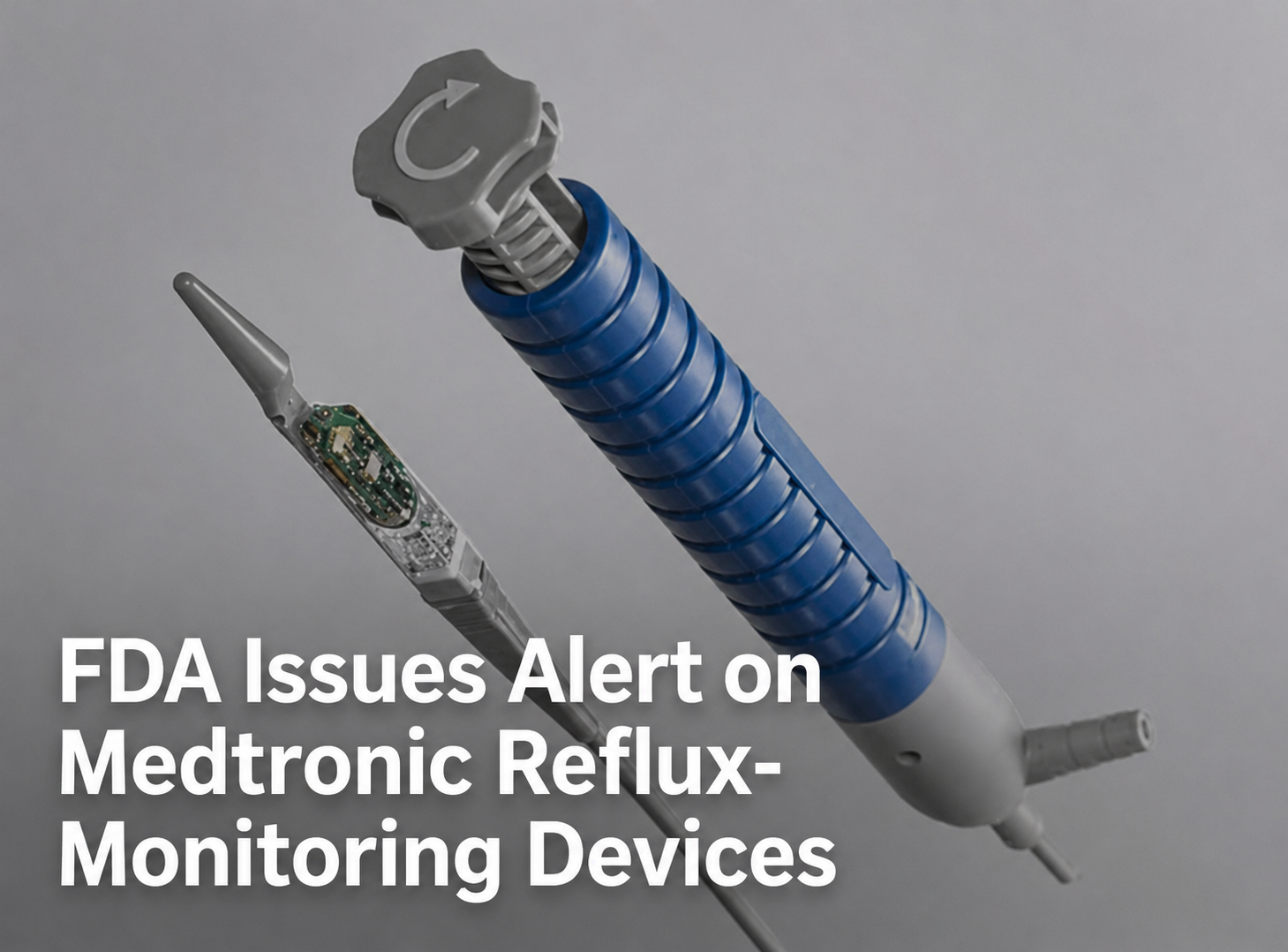
The warning involves the Bravo CF esophageal pH monitoring capsule delivery device, manufactured by Medtronic and its subsidiary Given Imaging. The system is commonly used to help physicians evaluate gastroesophageal reflux by measuring acid levels inside a patient’s esophagus.
As of August 10, 2026, Medtronic had reported 184 serious injuries and no deaths associated with the issue.
What Is the Bravo CF Reflux Monitoring System?
The Bravo system is designed to temporarily attach a small pH-monitoring capsule to the wall of the esophagus.
Once positioned, the capsule measures acidity levels and wirelessly transmits information to a recorder worn by the patient. Doctors can then compare changes in esophageal acidity with symptoms reported by the patient.
The information can help physicians determine whether symptoms such as chronic heartburn, chest discomfort or regurgitation may be associated with gastroesophageal reflux.
However, regulators say certain capsule delivery devices may not operate as intended.
Why Are the Devices Being Removed?
According to the FDA’s latest safety information, the Bravo CF capsule may fail to attach properly to the esophagus or may fail to detach correctly from the delivery device.
Medtronic has identified a potential problem involving a component that controls deployment of the capsule.
The company has also said the problem may be worsened if the delivery device is not kept straight during the procedure as instructed in its user guide.
Because the device is placed inside the esophagus, a deployment failure can create potentially serious complications.
FDA Lists Several Potential Medical Risks
Possible consequences associated with the malfunction include aspiration or inhalation, airway obstruction, esophageal perforation, laceration of the esophagus, hemorrhage, blood loss and bleeding.
The problem may also result in a foreign object remaining inside the patient or cause delays in obtaining an accurate diagnosis.
Airway obstruction and esophageal perforation are particularly concerning because they can require urgent medical intervention.
The FDA is continuing to review information surrounding the potentially high-risk device issue.
Which Medtronic Devices Are Affected?
The latest alert covers certain Bravo CF Capsule Delivery Devices, including the five-pack version identified by product number FGS-0635 and the single-pack version identified by product number FGS-0636.
Affected lots have expiration dates through October 20, 2027.
Medtronic has instructed customers to identify affected inventory immediately, separate the devices from usable medical supplies and stop using them.
Unused affected products should be returned to Medtronic for replacement.
Lots with an expiration date of December 10, 2027, or later are not included in the current action.
Medtronic Previously Recalled Some Bravo CF Devices
The latest action follows an earlier recall involving a subset of Bravo CF devices.
In June 2025, Medtronic notified customers about certain devices experiencing a similar attachment or detachment failure.
While the device failure observed in the latest action is similar, regulators say the underlying cause identified in the current issue is different from the cause associated with the previous recall.
That distinction is important because it indicates the company’s investigation identified another potential source of failure affecting additional device lots.
What Hospitals and Medical Facilities Should Do
Medtronic sent affected customers a notification on August 6, 2026, instructing them to immediately identify and quarantine unused affected devices.
Hospitals, gastroenterology clinics, endoscopy centers and other facilities that received the products should ensure that affected inventory is not used and is returned for replacement.
Organizations that transferred affected products to another facility are also being asked to communicate the safety information to those locations.
Patients scheduled for Bravo reflux testing may want to confirm with their medical provider that the equipment being used is not part of the affected inventory.
Patients should not cancel medically necessary testing solely because of the alert without first discussing the situation with their physician.
FDA Continues to Review the Safety Issue
The FDA issued its latest early alert on August 27 as it continues evaluating the scope and severity of the problem.
An FDA early alert is intended to inform health professionals and the public about potentially high-risk medical device problems while regulators continue collecting and reviewing information.
The agency has said it will provide additional updates if significant new information becomes available.
For Medtronic, the expanding action highlights the importance of device deployment reliability in diagnostic procedures involving the esophagus.
For patients and health care providers, the immediate priority is straightforward: identify affected Bravo CF devices, stop using them and ensure potentially impacted inventory is properly quarantined and returned.
With 184 serious injuries reported and the regulatory review continuing, the Medtronic Bravo CF issue remains an important medical-device safety development to watch.
Leave a Reply