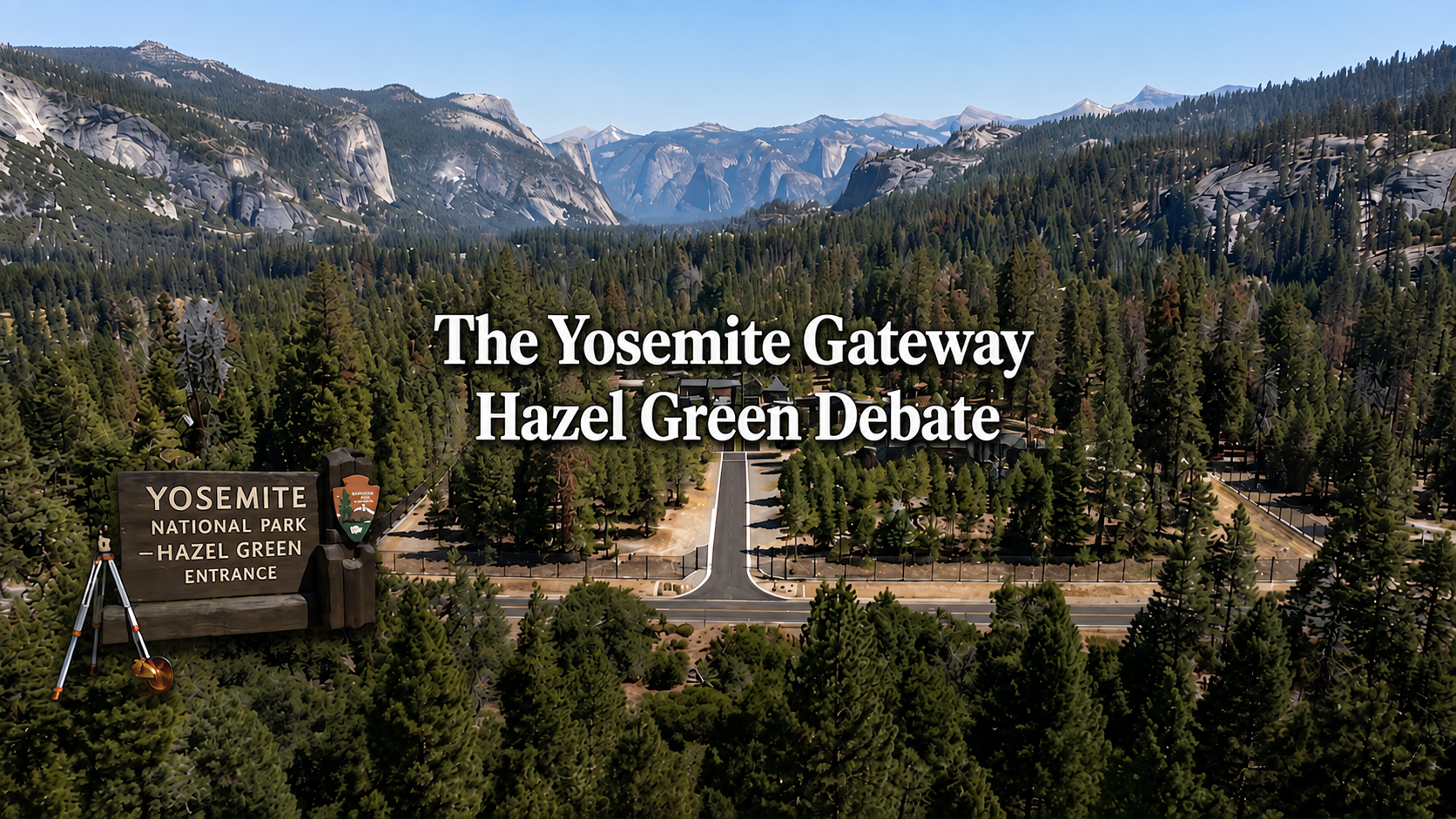
Public Asset or Exclusive Resort Corridor? The Yosemite Private Land Swap Controversy
Yosemite National Park, one of the world’s premier natural sanctuaries and a crown jewel of America’s public lands, has recently found itself at the center of an unprecedented environmental and political controversy. Reports that federal officials are considering a land exchange that would give a private real estate developer access through a core section of the park have sparked immediate outrage among conservationists, lawmakers, and the public.
As a national treasure faces the threat of being leveraged for commercial development, we take an in-depth look at the controversy surrounding the Yosemite private road proposal.
1. Overview: Kingsbarn Realty Capital’s Push for a Private Access Route
At the center of the controversy is a land swap negotiation between the federal government and Kingsbarn Realty Capital, a Nevada-based real estate investment firm. The company owns an undeveloped 83-acre parcel of land (historically known as Hazel Green Ranch) just outside Yosemite’s western boundary.
While the developer plans to build upscale private residences or a resort on the property, the location suffers from a major geographic bottleneck—reaching the main park areas currently requires a long, winding detour. To bypass this, Kingsbarn has pushed for a land exchange involving a roughly quarter-mile strip of National Park Service land to construct a private access road directly linking their property to park thoroughfares.
2. Core Controversies: Environmental Risks and Special Treatment
Environmental organizations and local stakeholders have raised vehement objections, pointing to several critical issues:
- Privatization of Public Assets: National parks belong to all citizens, not private entities. Granting federal park land to facilitate an exclusive commercial or residential development is widely criticized as an unacceptable breach of the public trust.
- Ecological and Habitat Threats: Constructing a road near Yosemite’s sensitive ecosystems—including ancient giant sequoia groves—risks severe environmental degradation and wildlife disruption.
- Dangerous Precedent: Critics warn that allowing a land swap for private convenience could set a legal precedent, inviting developers nationwide to target protected public lands.
3. Responses from the Government and Developers
In response to mounting public scrutiny, a U.S. Department of the Interior spokesperson stated that “no final decisions have been made,” emphasizing that any potential land exchange would strictly adhere to federal laws, comprehensive environmental reviews, and public notification procedures.
Meanwhile, Lanny Davis, an attorney representing Kingsbarn, defended the proposal, arguing that a direct route would ultimately reduce vehicle emissions and improve transit safety compared to longer alternative paths. Despite these assurances, public and political pushback remains intense.
Conclusion: Protecting the Integrity of Nature
Yosemite National Park cannot and should not become a commodity for private real estate speculation. This unfolding situation highlights the constant tension between corporate development and environmental preservation. As federal agencies weigh their options and environmental advocates gear up to block the deal, the future of America’s public land protections hangs in the balance.
Leave a Reply